June 26, 2026 · The MommyPlanIt team · 5 min read · nannies
10 Things Every Nanny Should Log Daily
Not because parents are checking up on you — because the small details of a child's day are how families stay connected when they can't be in the room.
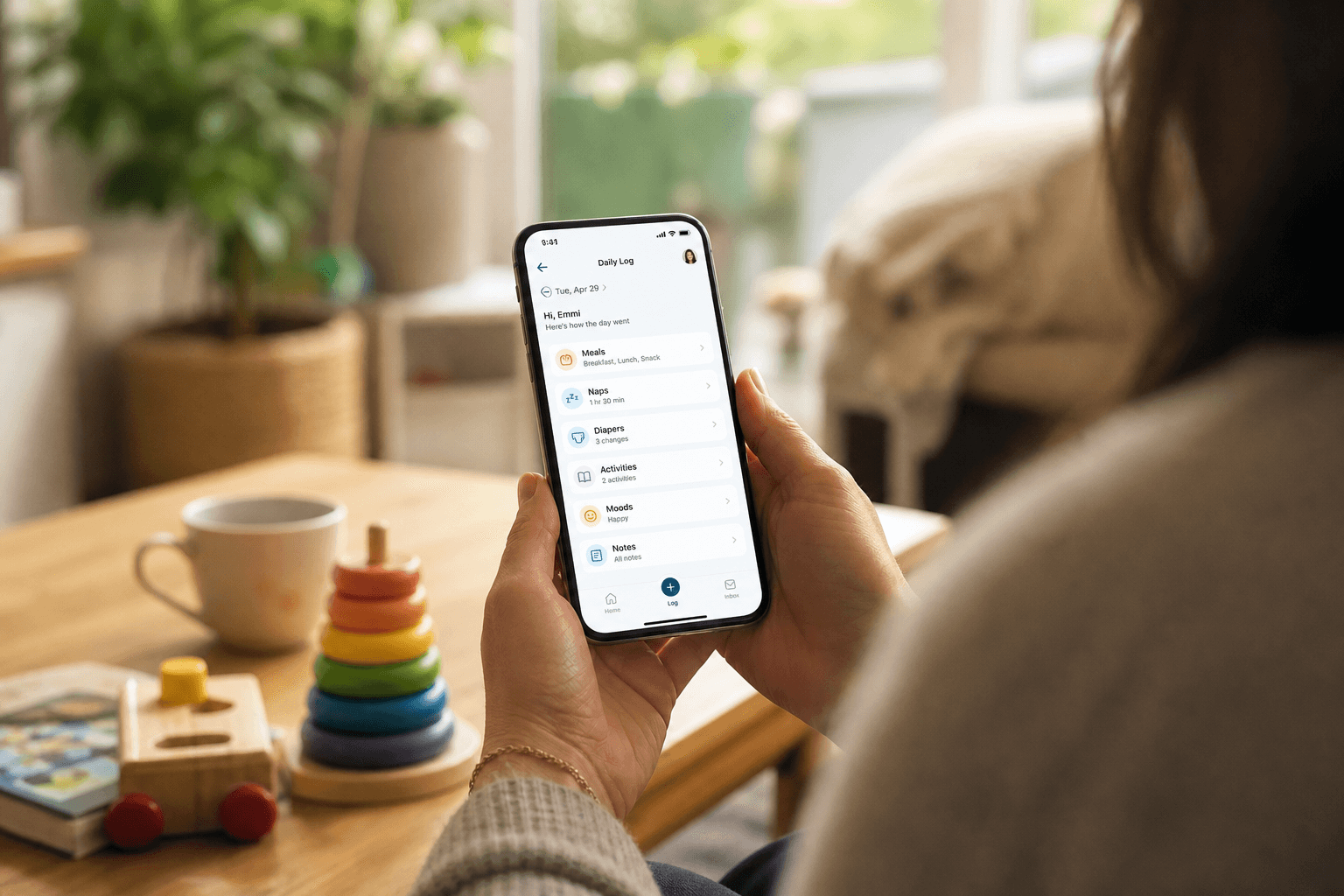
It's 6:15 p.m. A parent walks through the door already half-thinking about dinner, the unanswered email from 4 p.m., and whether the baby napped long enough to make bedtime survivable. They ask, "How was today?" and get the honest answer every caregiver gives when they're tired: "Good! She was great."
That answer is true. It's just not enough.
The hard part of nanny care isn't the big moments — it's the thousand small ones that happen between drop-off and pickup. Parents miss those moments by necessity, not by choice. Logging isn't about surveillance or scorekeeping. It's how you hand someone their day back in a form they can actually hold.
If you're a nanny, you don't need to write a novel. You need a rhythm: a few honest lines that say here's what mattered today. If you're a parent, this is what helps you show up at the door as a partner, not an interrogator.
1. Meals and snacks (the real version)
"She ate well" tells a parent almost nothing. "Offered chicken and sweet potato; ate most of the potato, refused chicken, happy with blueberries after" tells them whether tonight might be a second dinner situation, whether appetite is shifting, whether the texture thing is still a thing.
One parent told us she cried reading a log that said her toddler tried scrambled eggs for the first time and made a face, then stole half of the nanny's banana anyway. She'd been wondering all day whether the dairy trial was going okay. The log answered a question she was afraid to keep texting about.

2. Naps — start, end, and the in-between
Nap logs are less about perfection and more about pattern. When did sleep actually start? How long did it last? Was it in the crib, the stroller, your arms after twenty minutes of swaying?
Parents use this to plan their evening, yes — but also to stop spiraling. Maybe she's overtired is a different worry than she slept two hours and woke up giggling. Give them that distinction.
3. Diapers and potty — the unglamorous hero work
Nobody writes poetry about diaper changes. But a note like "rash looks better than yesterday; used the cream you left on the counter" saves a parent from discovering a problem at bath time and wondering how long it's been there.
For potty-training families, "Three successful sits, one accident during play — handled calmly, no big reaction" is worth more than a gold star sticker.
4. Mood, in plain language
You don't need clinical terms. "Cranky until 10, then sunny the rest of the day — teething vibes?" or "Extra clingy after lunch; fine after a walk" gives parents an emotional landing strip when they reconnect.
Kids have whole inner lives while we're at work. A one-sentence mood note says: I see your child as a person, not a task list.
5. What you actually did together
This one matters more than people expect. Parents often choose specific books, songs, activities — little pieces of who they want their child to become. When a nanny logs "Did the Goodnight Moon routine you wrote out; he asked for it twice" or "Tummy time on the play mat — 8 minutes, lots of complaining, some impressive head lifts," it closes a loop that text messages never quite manage.
You're not just reporting. You're saying: the plan you cared about made it into the room today.
6. Fresh air, movement, and the day beyond four walls
"We didn't get out — rain all morning" is a valid log. So is "Park for 40 minutes; obsessed with the big slide; made a friend named Leo (probably)."
Parents picture their kid's world in fragments. Help them see the whole room.
7. Medications and care notes — write it down, every time
If you gave a dose, applied a cream, or followed a special instruction, log it with the time. Verbal handoffs get lost between the door and the coffee maker. Parents shouldn't have to wonder wait, did that happen? while they're lying awake at night.
This isn't mistrust. It's the same reason nurses chart. Care deserves a record.
8. The hard stuff — early and honest
A bump, a fall, a moment of frustration between kids, a broken cup, a tantrum that lasted forty minutes — log it factually, without minimizing or dramatizing. "Tripped on the rug; small bump on forehead; ice applied; cheerful within ten minutes" is the kind of message that builds years of trust.
Parents are far more forgiving of incidents than they are of surprises.
9. One moment worth keeping
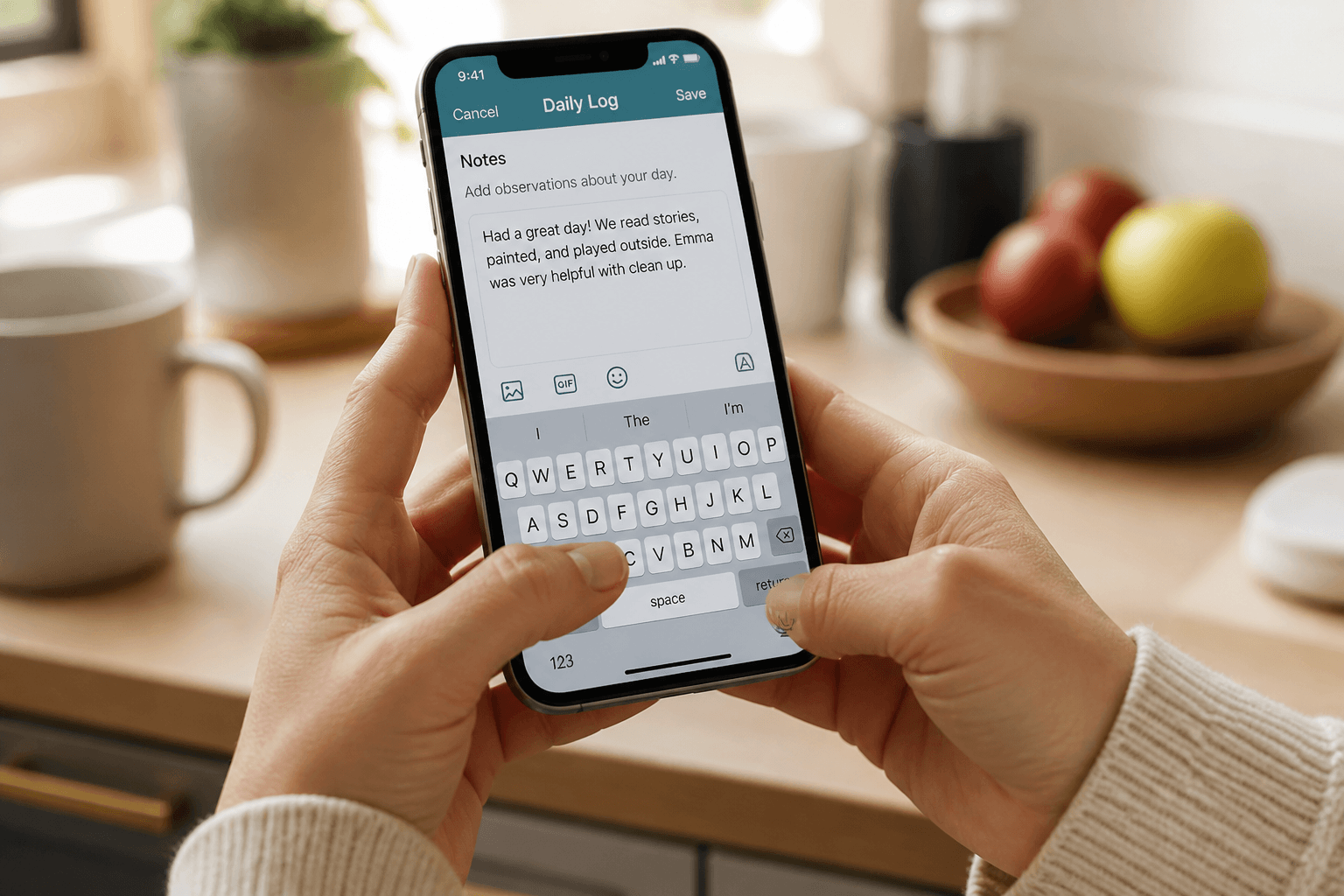
A photo. A quote. "She said 'I miss Mama' at lunch, then asked to call you — we did Facetime at 12:15."
These entries are why some parents re-read logs on the train home. Not for data. For connection.

10. A note for tomorrow-you (and tomorrow-them)
End with one forward-looking line: "Short nap today — might need early bedtime," or "We're out of size 4 diapers," or "Grandma pickup tomorrow — reminder she takes the blue bag."
It's the difference between starting the next day prepared and starting it with a scramble.
If you're a nanny reading this: thank you for the work nobody sees clearly enough. The logging is how you make it visible.
If you're a parent: ask for the details you actually need, and receive them with gratitude. Your nanny is handing you pieces of a day you wish you could've lived.